Marine Rescue Center seeks volunteers to save sea turtles during cold-stun season
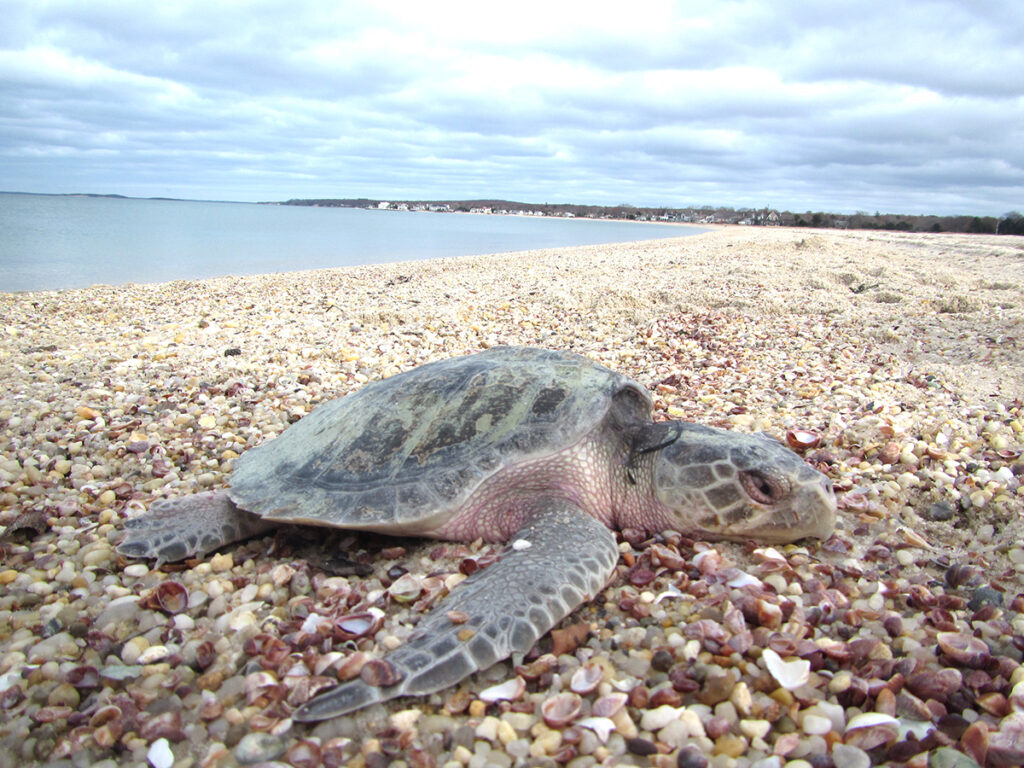
The New York Marine Rescue Center in Riverhead is urgently recruiting volunteers to patrol Long Island beaches for cold-stunned sea turtles, as the November-to-February rescue season officially begins.
Volunteers are needed to walk north-facing beaches after high tides and strong northwest winds, when endangered loggerhead, Kemp’s ridley and green sea turtles wash ashore, unable to navigate out of rapidly cooling waters.
Sea turtles live in the waters around Long Island in the summer, when they can be seen foraging, with some native species eating algae and seagrass and others consuming crabs. Because turtles are cold blooded, they can become trapped off Long Island when environmental clues are confusing and they do not migrate before the water temperature drops off. This usually happens once the water temperatures have dropped below 55 degrees.
“So, as they’re here and waters continue to drop, they become lethargic and unable to navigate out of the waters. Eventually, they become so listless that they float to the surface and kind of are just floating, waiting for prevailing wind, strong northwest winds that will push them to shore,” said Maxine Montello, executive director of the rescue center.
These animals are not actively swimming to the beach to strand. Instead, it is the wind that is pushing them to the shore. The three species that are found here are federally protected under the Endangered Species Act.
“We tend to find them with those prevailing winds right after a high tide. That combo of a high tide of strong winds will actually indicate that these turtles will most likely be up on the beach,” said Ms. Montello.
There are two tiers of volunteer rescuers. The first tier is trained via a lecture that is presented over Zoom. Once trained, these volunteers know when to patrol to be most effective, how to identify each species and how to reach out for help.
Tier two volunteers receive the tier one training plus field training. This allows the volunteer to assist the rescue team when they arrive.
“We show them how to — once they find a turtle — take GPS coordinates, take photos, be able to identify that species, and then we teach them how to handle that turtle in the field so that we have more hands to help us get these animals back to our facilities,” Ms. Montello said.
One volunteer has been a cold-stun patroller for the last five years and found his 29th turtle on Nov. 17.
“I would encourage anybody that lives by a north-facing beach on Long Island to get out and walk. These turtles typically wash up between November and January. So any help that the public can give us is greatly appreciated,” said Rob, who didn’t want his last name used. “All of these turtles are endangered species; Kemp’s ridley are the most critically endangered, and we typically find a lot of juvenile Kemp’s during the wintertime, during the cold stun season.”
There are volunteer opportunities inside the rescue center’s facility as well, for those who are unable to patrol the beaches.
“They can help with us in the field, but we also need help here at the facility. We’re located in Riverhead, New York, and we maintain a sea turtle and seal rehab hospital. We’re one of the largest in the network, which is Virginia all the way to Maine. Last year, I believe we processed over 200 animals throughout the year,” said Ms. Montello. “So it gets pretty busy. It’s definitely for somebody that has some time on their hands and wants to work with how they preserve these really critical species.”
Individuals interested in applying can visit nymarinerescue.org/.
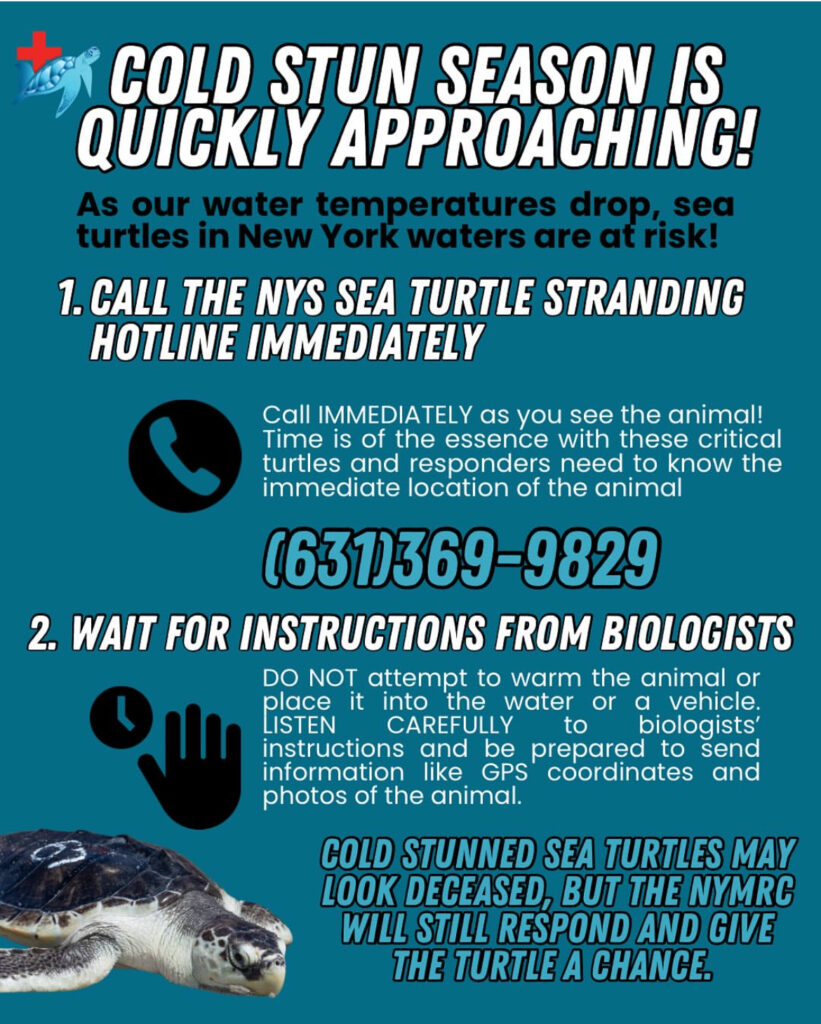
New York Marine Rescue Center set up a stranding hotline for anyone who happens upon a cold-stunned, often dead-looking sea turtle. The first step is to call 631-369-9829. Biologists will be on the line to ask questions and give instructions.