Keeping Track of History: Manorville Station
The Long Island Rail Road, chartered by New York in 1834, is one of the oldest railroads in the country. Taking the train is a ubiquitous part of life on Long Island, and the history of each station is as varied and interesting as the people who ride its rails.
This is the first in a series on the history of train services on the East End, and the numerous changes the industry brought to Riverhead and the North Fork.
“It took them 10 years to go from the foot of the East River in Brooklyn to Greenport,” said Don Fisher, president of the Railroad Museum of Long Island in Riverhead.
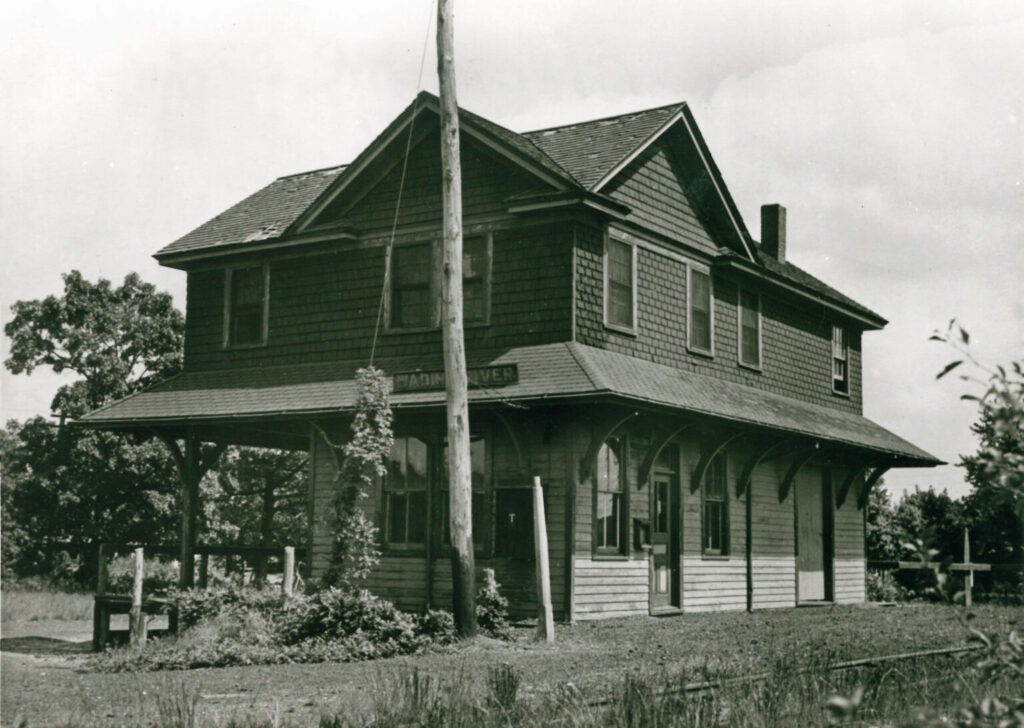
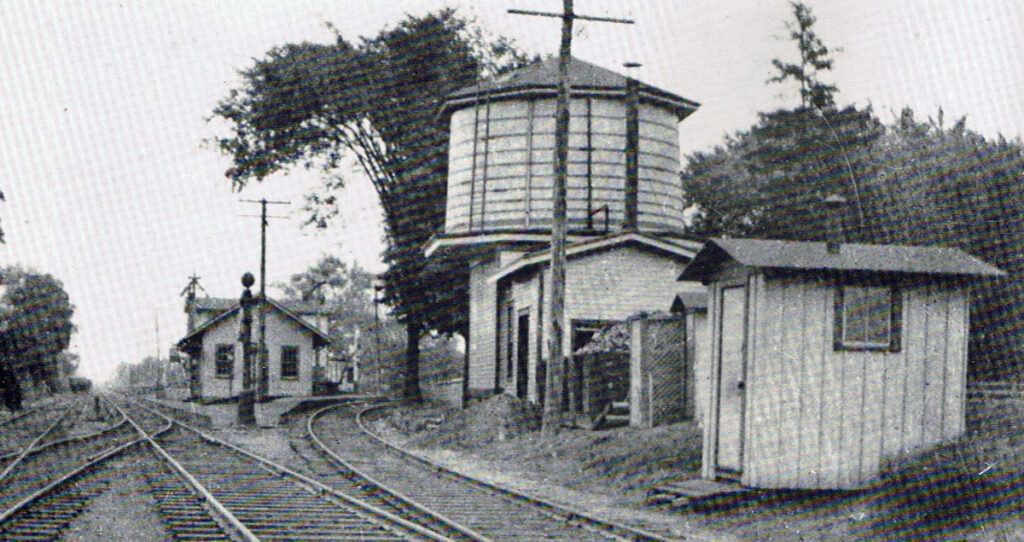
The Manorville Station stop was originally called St. George’s Manor and opened in 1844. Local history holds that the first station agent, Seth Raynor, was a patriot from the revolutionary war. The story goes that he painted over the “St. George’s” because it reminded him of the king, leaving just “Manor.”
The stop was little more than a refueling station, since there was no town to speak of at that time. Woodcutters would cut timber and stock it next to the tracks, as these trains ran on wood and not coal. There was also a water tower to replenish the steam engine’s supply.
“It was important stop for them to pick up water and wood on their way to make steam to propel trains out to Greenport. Though it was a fueling depot … it also became an important station,” said Mr. Fisher. “Manorville was really just a clearing in the woods where the train would stop, take on water. The local people would sell them firewood.”
In 1869, Manorville station became the western end of the Sag Harbor branch, a line that was extended through Eastport to the south shore. This was to outmaneuver the South Side Railroad, which ran from Brooklyn to Patchogue and had planned to extend out the South Fork.
“The Long Island Rail Road said, ‘Hey, we got to make a right hand turn here. We’ve got to get in front of the South Side Railroad so that they can’t proceed from Patchogue out to Sag Harbor.’ And that’s what they did,” said Mr. Fisher. The track ran through the South Fork towns and ended in Sag Harbor.
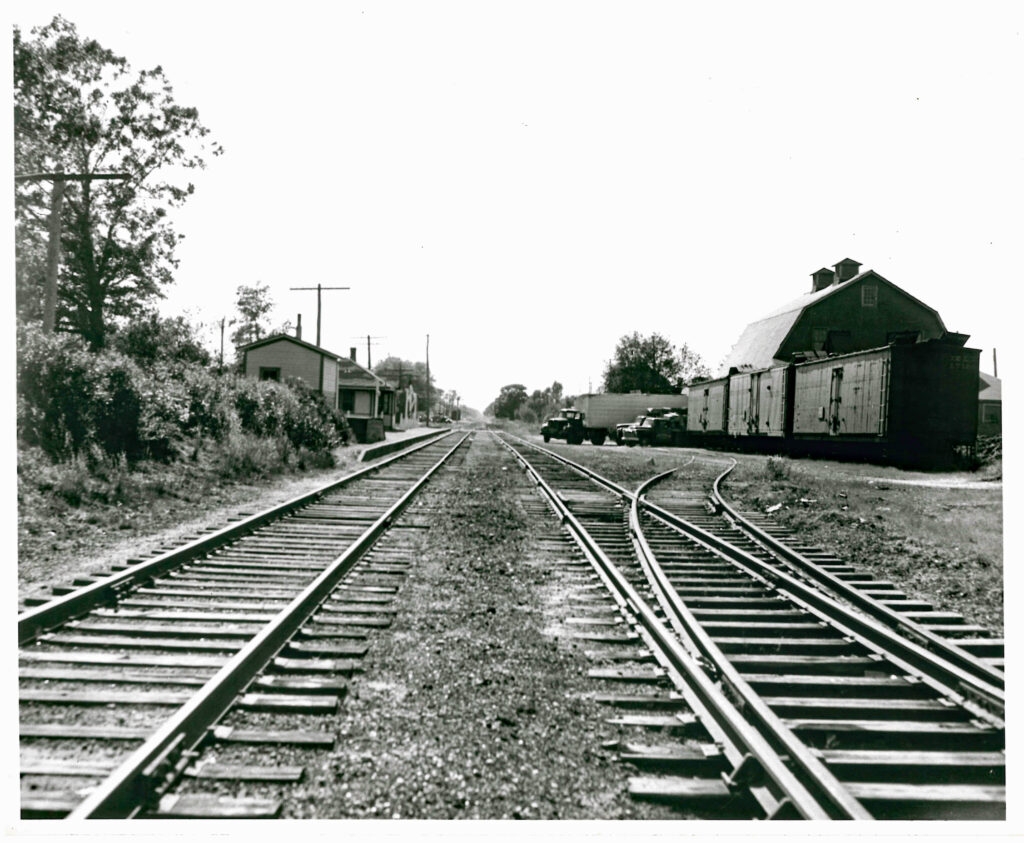
Manorville also featured a special feature of railroad engineering called a wye. It consists of a triangle of tracks with a switch at each corner, where an engineer can navigate around the triangle to reverse direction.
“You can imagine a train coming along, going up the right-side angle to the top point,”said Mr. Fisher. “He stops his train, he backs on down to the left-hand point, which is going Greenport. Now the train is facing New York City. And you can go across the base of the triangle with your train and go all the way back to Ronkonkoma … [to] get back into the city. If you’ve got the acreages, the land, that’s very inexpensive to make those three tracks and build a wye.”
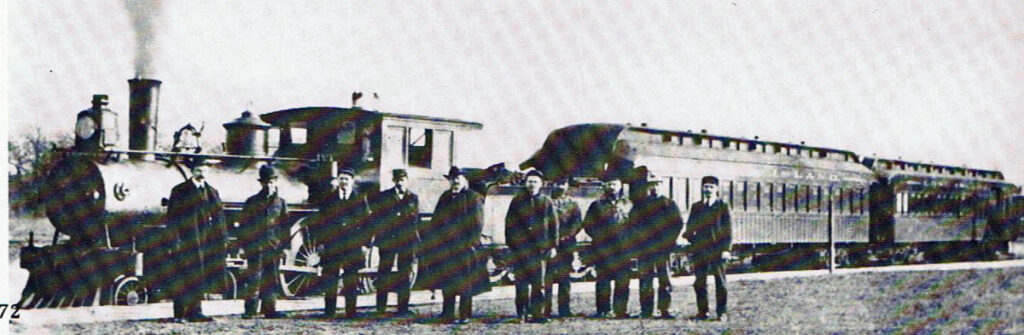
This feature allowed the railroad to operate what was known as the “Greenport Scoot,” a train that ran from Greenport to Manorville and then all the way to Sag Harbor.
“Manorville, at this point, was very important as a communications loop for people to go from the shipping and the whale industry out of Greenport to the shipping and whale industry down in Sag Harbor. You [could] go back and forth and you didn’t have to take a boat,” said Mr. Fisher. “That opened up all kinds of opportunities for families to move back and forth.”
The mail was carried by horse or stagecoach until 1908, when the Manorville Post Office opened near the train stop. Around this time, the station name officially changed to Manorville.
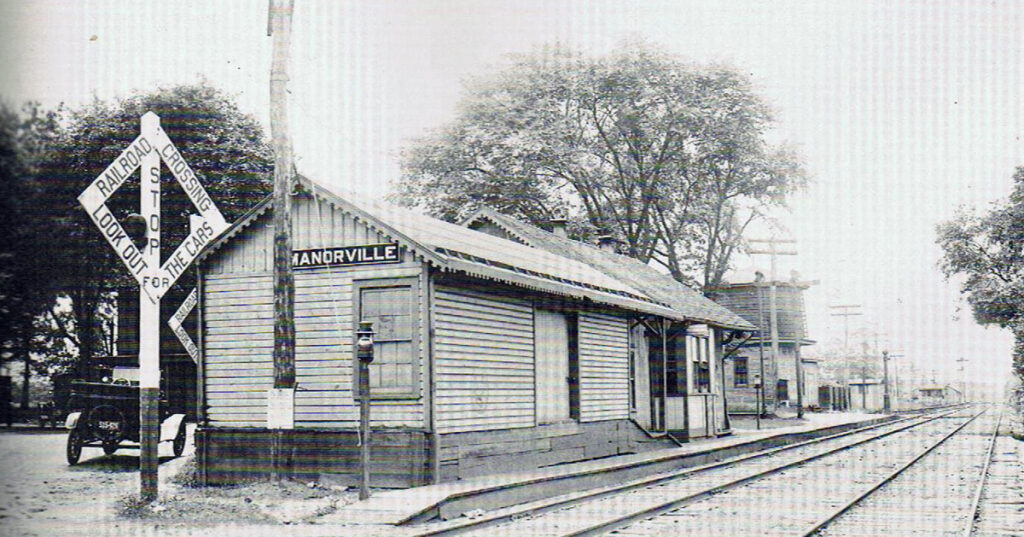
The station building was torn down and replaced with a shelter in 1941, and by 1949 the branch was abandoned. In 1968 the stop was officially discontinued.
“It was very lightly used by the 1940s. Railroading is a business, and any place that they can save money and pare off maintenance costs, they’re gonna do it.” Mr. Fisher said. “I think today, in hindsight, they wish they had it.”
Other stories in the Keeping Track of History series: